Free preview before you pay · Made with AI from your photo

German Shepherd portraits

German Shepherd Painting from Your Photo

Upload a photo of your shepherd and see the painting free first: the saddle, the mask and the ears just as they are. Then order it as a print, a canvas or a framed piece.

Style

Brushwork: Loose & Painterly · Background: Soft Grey

No sign-up to preview · Pay only if you love it

Add a photo of your pet first.
  • Free preview
  • Free redos
  • No sign-up to try
Framed · 16 × 20 in
Loose dog oil painting of a German Shepherd on a soft grey background

No. 004 · Classic Oil · Loose & Painterly · Soft Grey

Portrait of Ranger

Coat by coat

Black-and-Tan, Sable, Black or White: How Each Coat Paints

A German Shepherd's colour is a pattern, not one shade, and the painting keeps your dog's pattern from the photo. Here is what that means for the four coats you see most, and the photo that shows each one best.

  1. Black-and-tan

    A black saddle over the back, a black mask, and tan on the legs, chest and cheeks. The tan runs from pale cream to deep red; the redder ones are called black-and-red.
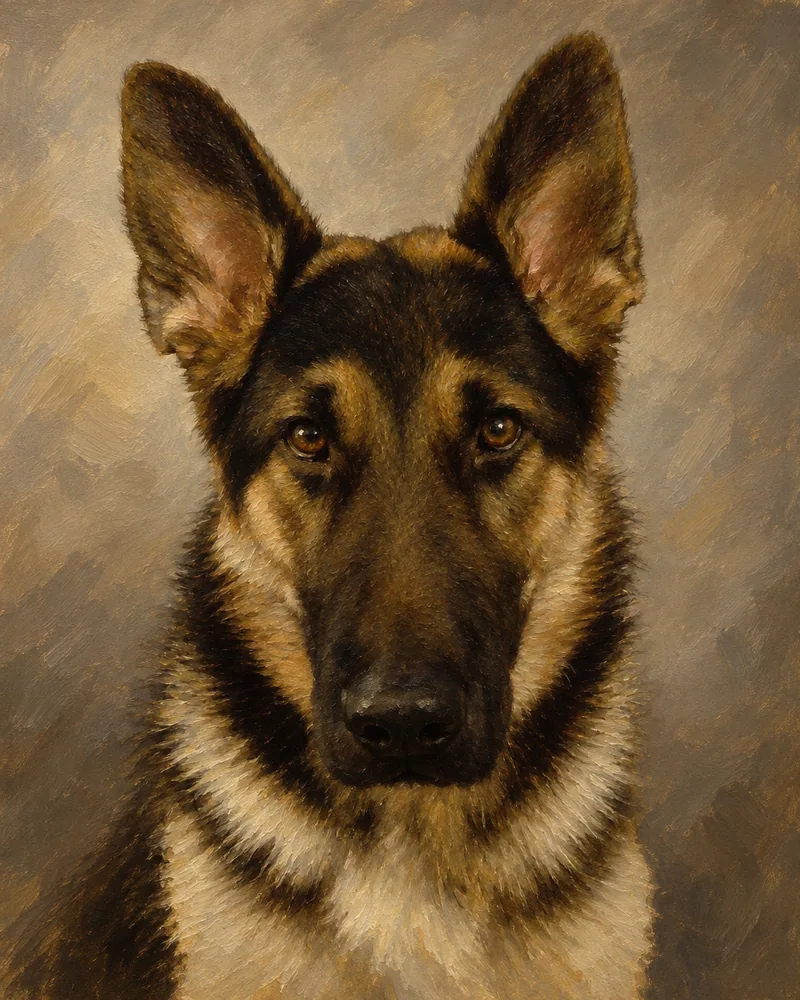
    Loose dog oil painting of a German Shepherd on a soft grey background
    Ranger · No. 004 · Classic Oil
    • Saddle black
    • Tan
    • Cream
    In paint
    The edge where the saddle meets the tan is what makes the dog read as a shepherd, so the painting keeps that edge and the dark mask around the eyes.
    In the photo
    Open shade, face toward the light. Under a black mask the eyes disappear in hard sun or with a flash.
    Look to start with
    Classic Oil, like Ranger: loose brushwork follows the coat around the chest and keeps the bib apart from the saddle.
  2. Sable

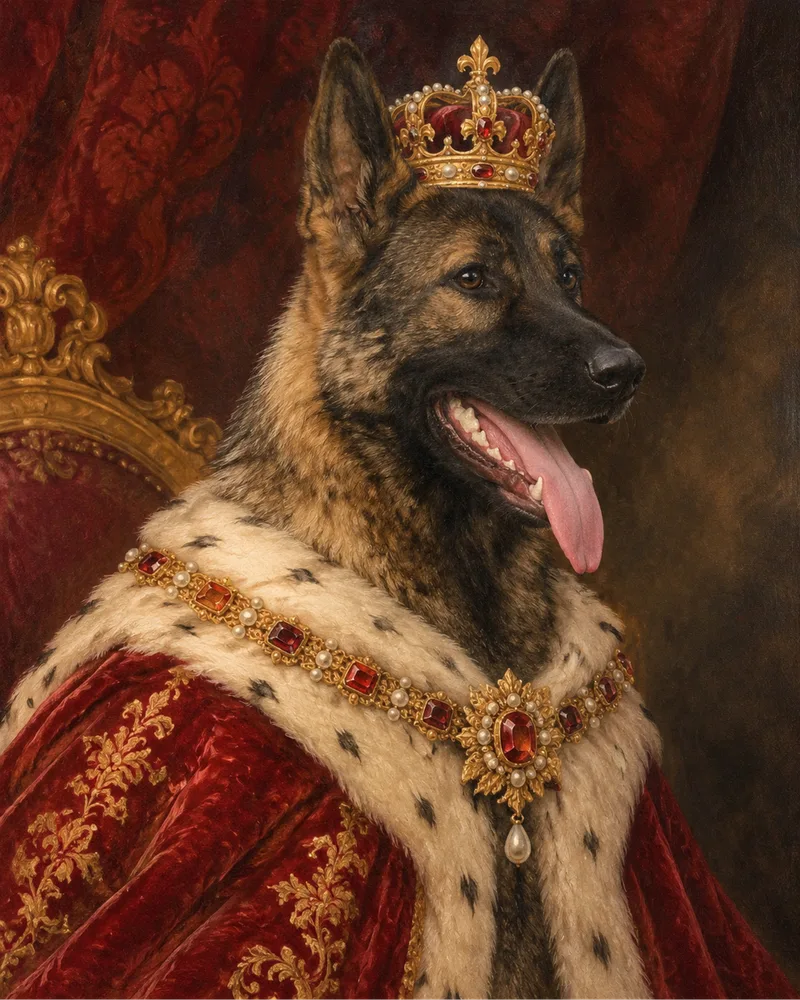
    Each hair is banded, light at the root and black at the tip, so the coat looks grey, gold or red under a dark overlay instead of a set saddle. Its gene outranks black-and-tan and black, and it is common in working lines.

    Royal dog portrait of a sable German Shepherd with upright ears, wearing a gold crown and an ermine-trimmed crimson mantle
    His Majesty King Karlo · No. 001 · Royal
    • Black tips
    • Grey-gold
    • Warm base
    In paint
    Sable is painted in layers: a warm base, then darker tips brushed the way the hair grows. Fine brushwork keeps the banding; loose brushwork turns it into a soft grey-gold.
    In the photo
    Daylight. Indoor light flattens the banding into plain brown.
    Look to start with
    Classic Oil with fine brushwork, or Royal, where the crimson mantle and gold chain warm up the grey.
  3. Solid black

    Black from nose to tail, sometimes with a few tan hairs on the toes or a little white on the chest. Black is recessive, so both parents have to carry it.

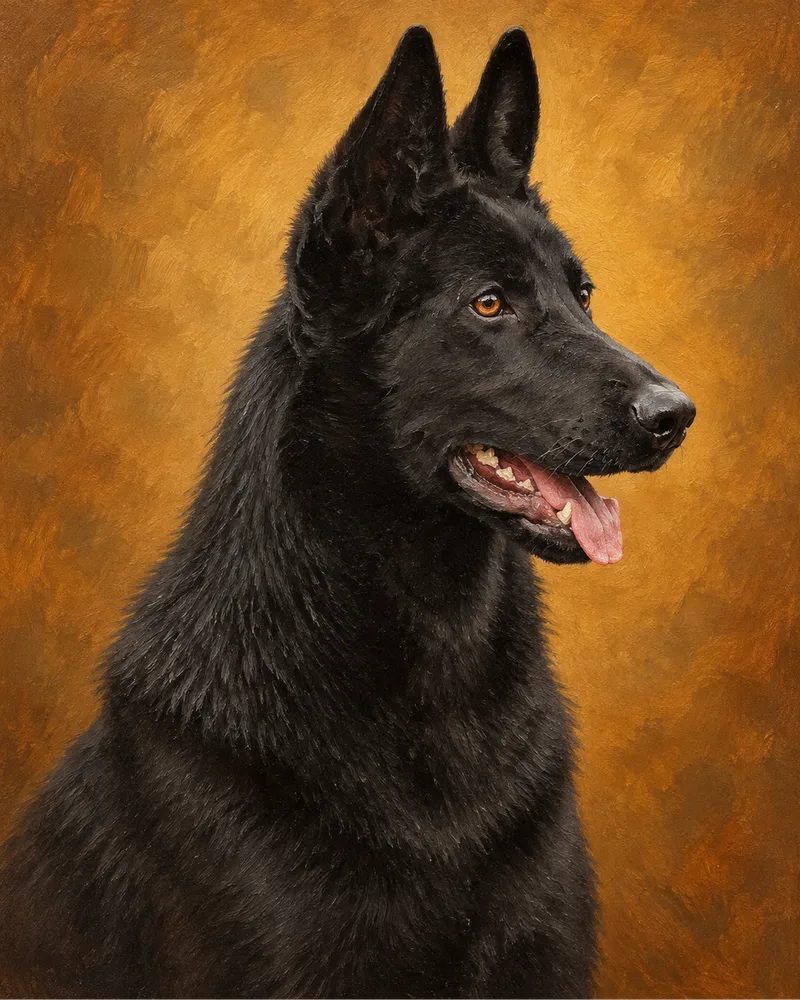
    Classic oil dog portrait of a solid black German Shepherd with amber eyes and upright ears on a warm ochre background, in fine detail
    Onyx · No. 004 · Classic Oil
    • Black
    • Blue sheen
    • Brown eye
    In paint
    A black dog is painted with light, not with black: the shine along the back, the brown of the eyes, the rim of each ear against the background.
    In the photo
    Outside in the shade, never with flash. A flash turns a black face into one dark shape with two bright dots.
    Look to start with
    Classic Oil on ochre or grey, lighter than the coat so the head keeps its outline, or Watercolor, where the white paper edges the fur.
  4. White

    White all over, with a black nose and dark eyes. A recessive gene hides the other colours; a white shepherd is not an albino.

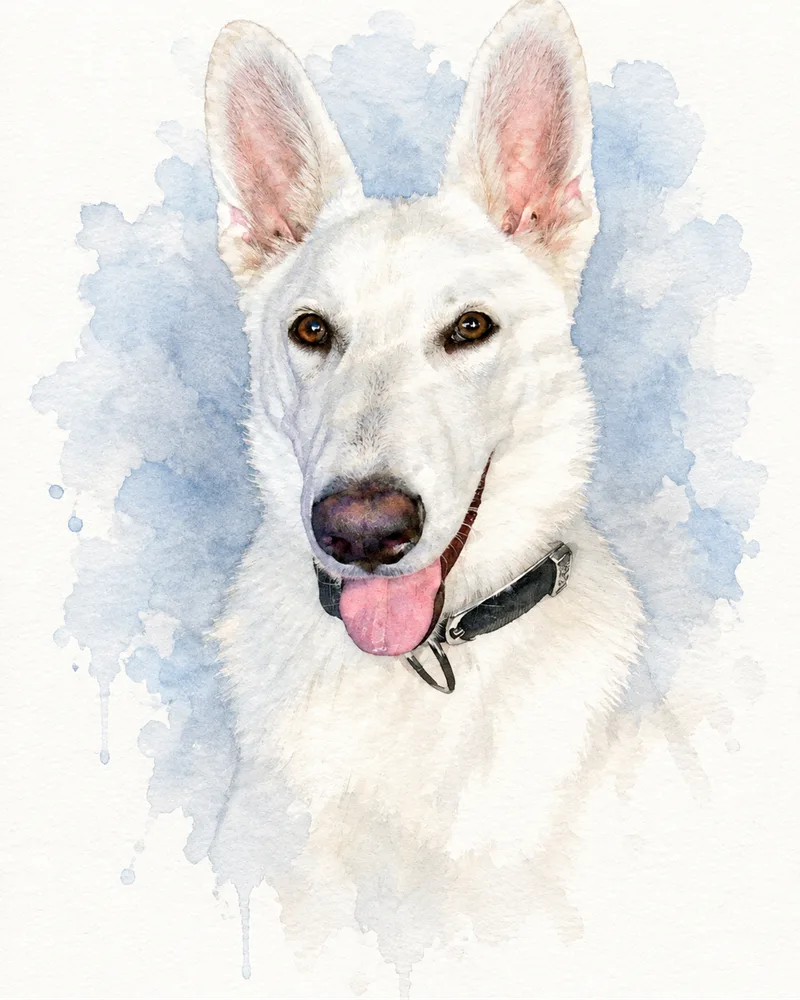
    Watercolor dog portrait of a white German Shepherd with upright pink-lined ears and a black collar on a soft dusty blue wash
    Study of Jake · No. 006 · Watercolor
    • White
    • Shadow grey
    • Black nose
    In paint
    White fur is painted with shadow: cool greys and warm creams shape the ruff, the ears and the legs, against a background that isn't white.
    In the photo
    Overcast daylight or open shade. Bright sun burns white fur to a blank.
    Look to start with
    Watercolor, where the shadows carry the shape, or Classic Oil on blue or green.
Close-up of a German Shepherd's upright ears and dark mask in loose oil brushwork
Ranger's ears, from his Classic Oil painting below.

The ears

A German Shepherd Portrait Starts with the Ears

Big, upright and turned toward whatever he just heard: the ears give a shepherd's head its outline. So the painting follows them as they are in your photo: up, back, or one of each.

  • Up and forward

    The alert look most owners want. Say his name or crinkle a treat bag just before you take the photo, and both ears come up together.

  • Back and soft

    Ears folded back read as calm or happy, not alert. If that is how you know him best, use that photo: the painting keeps the softness.

  • Puppy ears

    While a puppy is teething, often until about seven months, the ears can go up and down, one at a time. A painting with one ear up keeps an age that won't come back.

German Shepherd paintings

German Shepherd Paintings, Look by Look

The shepherds in our catalogue, each in a different look, and what that look did with the coat.

  • Loose dog oil painting of a German Shepherd on a soft grey background

    No. 004 · Classic Oil · Loose & Painterly · Soft Grey

    Portrait of Ranger

    Loose strokes follow the coat around the chest, so the black saddle and the cream bib stay apart without a hard line, and the grey behind him lets the tan glow.

    More dog oil painting
  • Classic oil dog portrait of a solid black German Shepherd with amber eyes and upright ears on a warm ochre background, in fine detail

    No. 004 · Classic Oil · Fine Detail · Warm Ochre

    Portrait of Onyx

    Fine brushwork paints the black with light: the shine along the neck, the amber of the eyes, the rim of each ear against a warm ochre that keeps the head from sinking into the background.

    More dog oil painting
  • Royal dog portrait of a sable German Shepherd with upright ears, wearing a gold crown and an ermine-trimmed crimson mantle

    No. 001 · Royal · King · Crown

    His Majesty King Karlo

    The banded sable coat stays grey-gold on the head and darkens along the neck, and the crimson mantle and gold chain warm the grey without turning it brown.

    More royal pet portraits
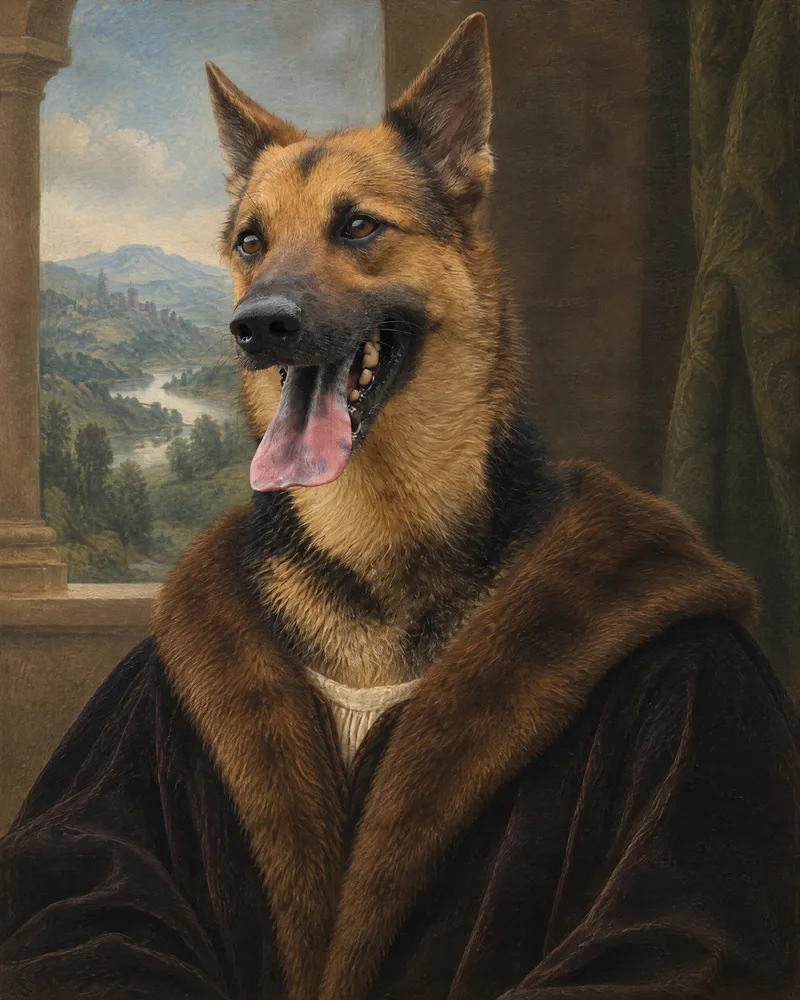
  • Renaissance dog painting of a German Shepherd in a scholar's robe with a fur collar before a window onto a river valley

    No. 002 · Renaissance · Scholar's Robe · Landscape Window

    Ser Bobby of the Valley

    The robe hides the saddle and its fur collar picks up the tan, so the painting is all head: the mask, the open mouth and the ears against a river valley.

    More dog Renaissance painting
  • Watercolor dog portrait of a white German Shepherd with upright pink-lined ears and a black collar on a soft dusty blue wash

    No. 006 · Watercolor · Dusty Blue

    Study of Jake

    The paper does the white: grey shadows shape the ruff, the muzzle and the ears, and a dusty blue wash behind the head gives the pale coat an edge.

    More watercolor dog portraits

The other looks, for a shepherd

  • Victorian pet portrait · High collars, lace and impeccable manners.A top hat or a lady's dress, as an oval cameo or full length; a dark coat stands out in the cameo.
  • Funny pet portraits · Generals, knights, astronauts and beach days: their funniest side, in oil.A costume and a joke. The ears do half the work.

German Shepherd colours

What's the Rarest Color for a German Shepherd?

Breeders usually name isabella, also called lilac. Here are the breed's colours from the ones you meet at the park to the ones most people never see. The order is a rough guide from breed standards and breeders, not a count.

  1. 1 · Common

    Black-and-tan, black-and-red

    The colours most people picture.

  2. 2 · Less common

    Sable

    Its gene outranks black-and-tan and black. Common in working lines, rarer in show lines.

  3. 3 · Less common

    Solid black, bi-colour

    Recessive: both parents have to carry it. A bi-colour is nearly all black, with tan only on the legs and face.

  4. 4 · Less common

    White

    Recessive. Still a German Shepherd, but the AKC standard disqualifies a white dog in the show ring.

  5. 5 · Rare

    Blue, liver

    Diluted colours; the AKC standard lists blues and livers as serious faults.

  6. 6 · Rarest

    Isabella (lilac)

    A pale grey-fawn that needs the blue and the liver genes at once.

Whatever the colour, we paint the one in your photo: a liver stays liver and a blue stays blue, never turned into black-and-tan.

German Shepherd Painting Questions

Can I turn my dog picture into a painting?

Yes. Upload the photo at the top of this page and you'll see your German Shepherd as a painting in about 60 seconds, free and without signing up (3 free previews a day). If you like it, order the digital file from $9 or a print, canvas or framed piece; if not, redo it (3 free redos) or try another look.

What's the rarest color for a German Shepherd?

Breeders usually say isabella, also called lilac: a pale grey-fawn that needs both the blue and the liver genes. Blue and liver are rare too. White is less rare, but the AKC standard disqualifies white dogs in the show ring. We paint each of them in the colour your photo shows.

How do you paint a German Shepherd dog?

Painters usually block in the shapes first: the ears, the black saddle and the mask, then the tan, then the fur in the direction it grows, from the darks to the lights. Ours isn't painted with a brush: the studio paints your shepherd from your photo in the look you pick, and in Classic Oil the brushwork option (fine, loose or palette knife) decides how the fur is laid down.

Is my German Shepherd painting painted by hand?

No. It is made with AI from your photo, in the look you choose, and then printed. That is why you can see it free first.

How much does a German Shepherd painting cost?

The preview is free. The digital file is $9; art prints start at $39, canvases at $69 and framed prints at $89. Prints ship to United States and Australia: made to order, shipped within 10 business days and usually with you in 3–4 weeks.

Can you paint a puppy, or a shepherd who has died?

Yes. Any photo where the face is sharp works: a puppy with one ear still down, or an older photo of a dog you've lost. If the photo is small or dark, try it: the preview shows you what we can make of it before you pay anything.

Keep looking

More Paintings for Your Dog

We use cookies to understand how the site is used, improve it, and measure our ads. Privacy policy