Watercolor · dogs only · every coat
Watercolor Dog Portrait from Your Photo
Upload a photo of your dog and see it in watercolor in about a minute, with the wire beard, the curls or the merle patches kept. Free preview before you pay.
No sign-up to preview · Pay only if you love it
Add a photo of your pet first.- Free preview
- Free redos
- No sign-up to try
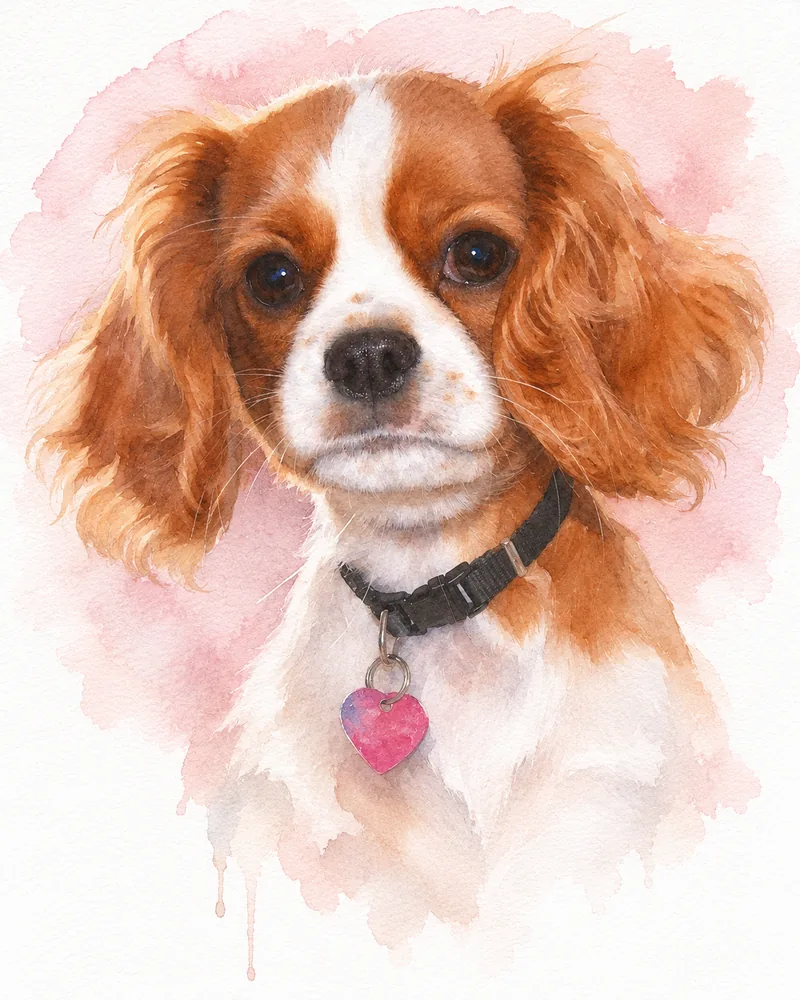
No. 006 · Watercolor · Blush
Study of Daisy
Like one? Tap it to use its wash
Watercolor Dog Portraits, Coat by Coat
Five coat types and five colours that are hard to paint, each with what watercolor does with it and what we keep of your dog.
By coat type
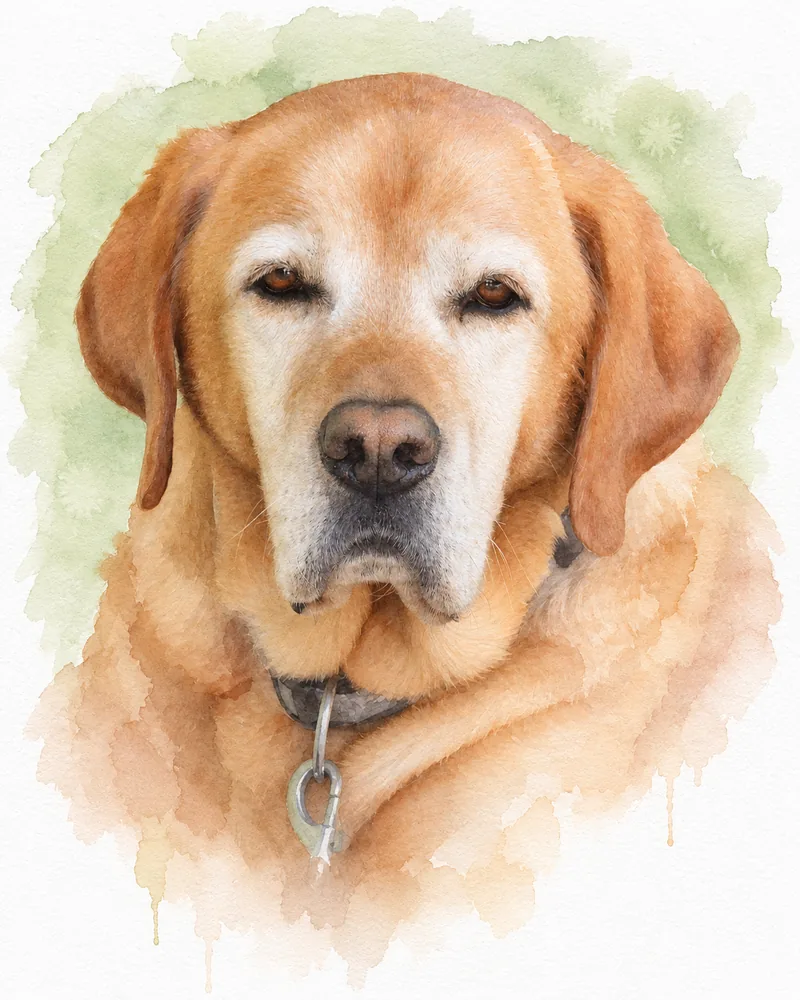
Smooth & short
Yellow Labrador · Bailey · Sage wash
Few strokes and soft edges: the shape comes from the shadows, not from single hairs.
We keep the grey muzzle, the shine on the nose, his own collar.
Photo tip Side light from a window; a flash flattens a short coat.
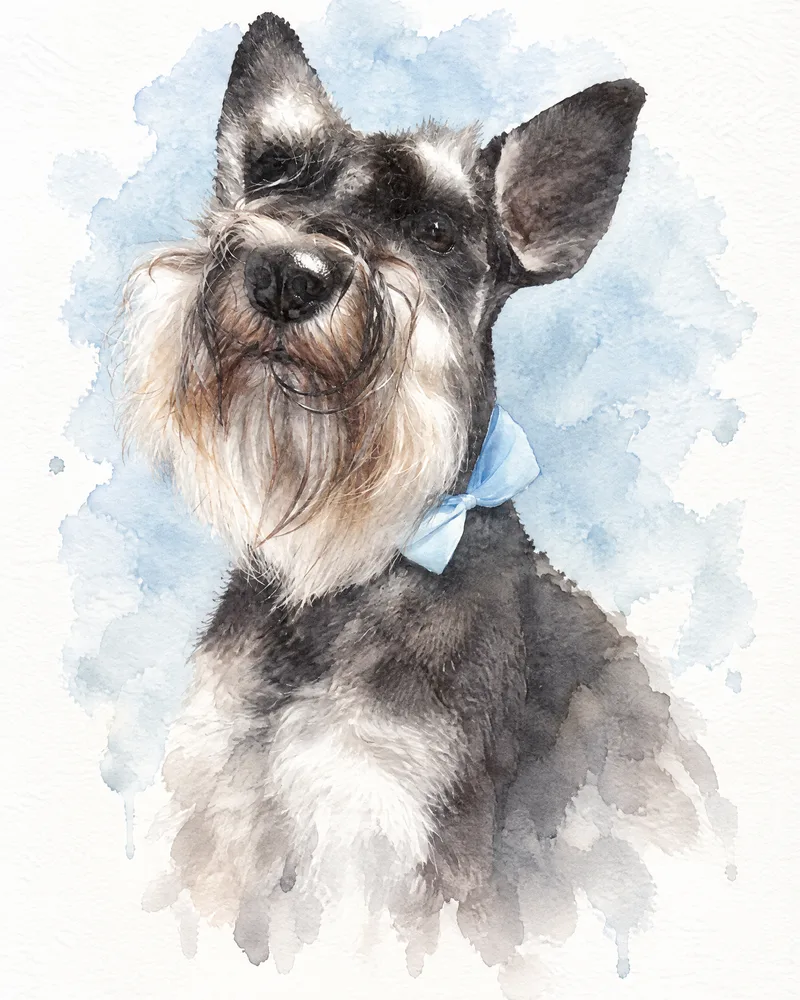
Wire
Miniature Schnauzer · Otto · Dusty Blue wash
Dry-brush strokes that break up on the paper, the way a wire coat does.
We keep the beard and the eyebrows as separate strokes, the salt-and-pepper mix.
Photo tip Groomed or shaggy: the portrait paints the coat in the photo.
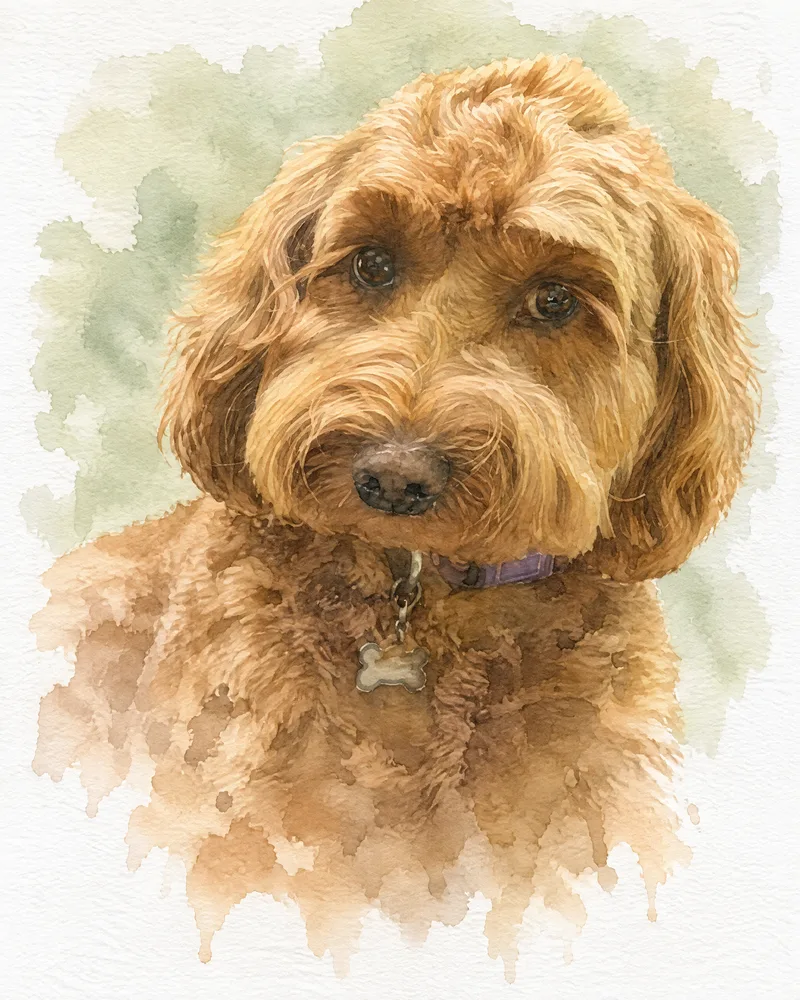
Curly
Goldendoodle · Maple · Sage wash
Small loops of dropped-in colour, so the curls read as texture rather than as hairs.
We keep the curls around the eyes, the ear length, the lighter tips of an apricot coat.
Photo tip Shoot at eye level, so both eyes catch the light through the curls.
Long & silky
Cavalier King Charles Spaniel · Daisy · Blush wash
Wet-in-wet: the waves of the ears bleed into the paper and stay soft.
We keep the ear feathering, the white blaze, her heart tag.
Photo tip Avoid the sun behind your dog: it turns long ears into a halo.
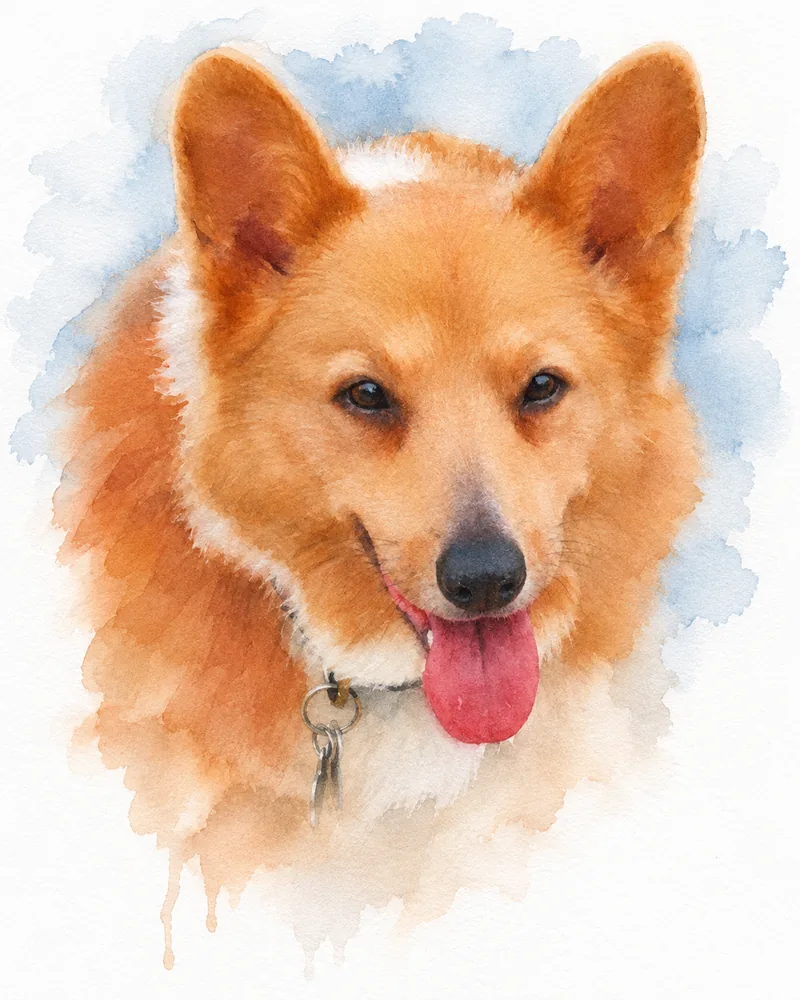
Double & fluffy
Pembroke Welsh Corgi · Biscuit · Dusty Blue wash
The ruff is left as paper and the outline broken, so the fluff isn’t cut out.
We keep the white chest and ruff, the red saddle, the tongue.
Photo tip A little from above: at eye level the fluff hides the neck.
By colour
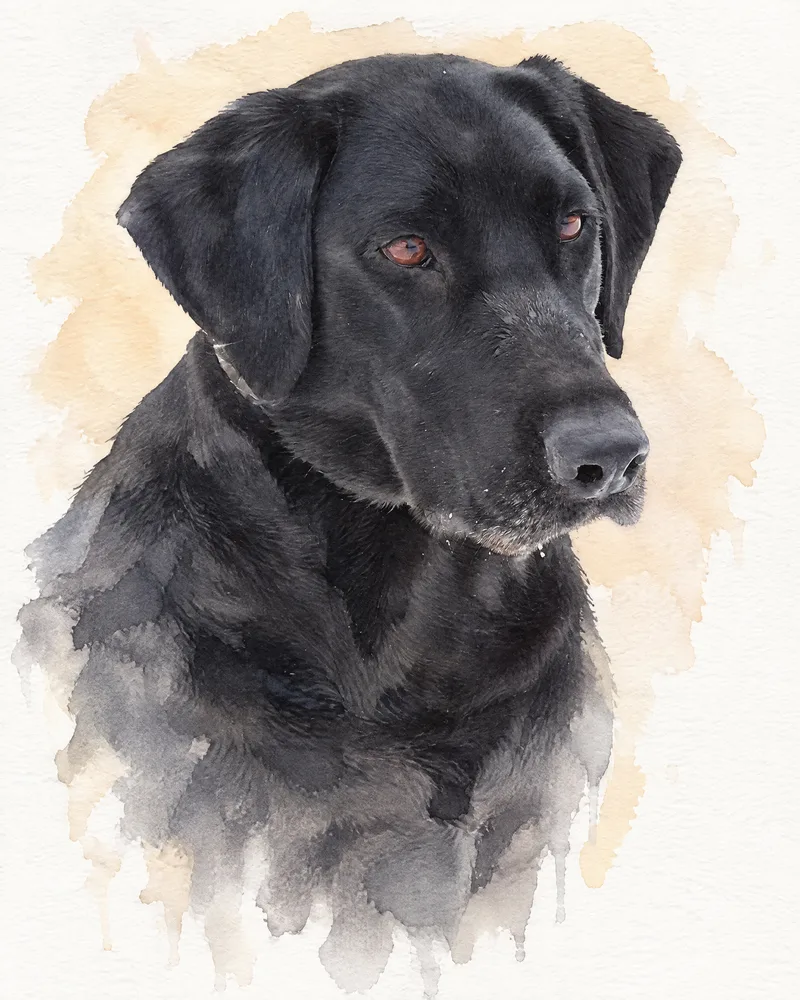
Black
Black Labrador · Shadow · Sand wash
Never one flat black: blues and browns in layers, the highlights left white.
We keep the eyes inside a dark face, the grey of the chin.
Photo tip Daylight, facing a window. No flash: it turns dark eyes green.
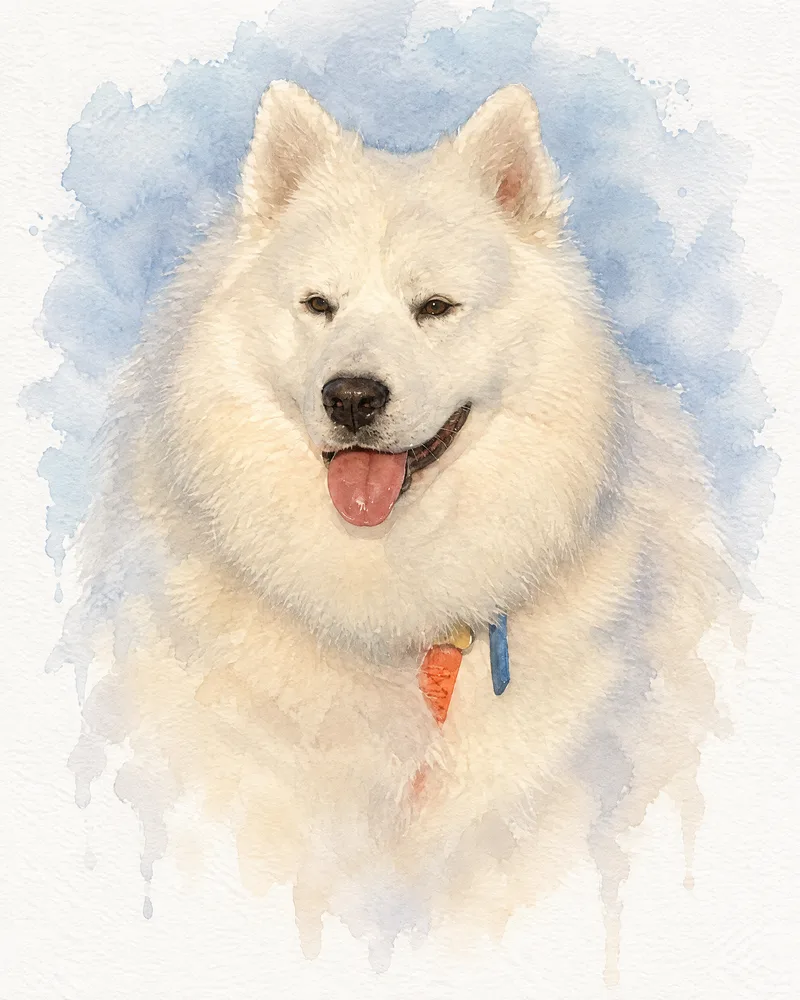
White
Samoyed · Nova · Dusty Blue wash
White fur is the paper itself; the dog is drawn by its shadows and the wash behind it.
We keep the cream undertone, the black lips and nose, the smile.
Photo tip Shade, not midday sun: bright sun burns white fur to blank.
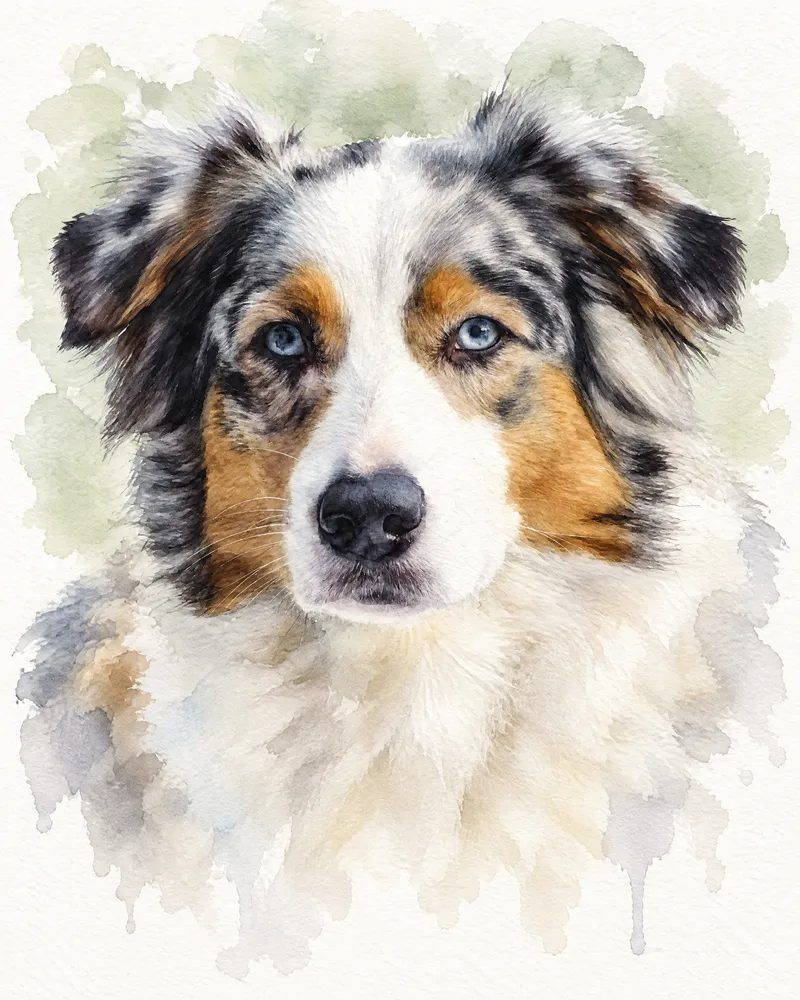
Merle
Australian Shepherd · Skye · Sage wash
Patches dropped into wet grey, so their edges blur like real merle.
We keep where each patch sits, the copper points, blue or odd eyes.
Photo tip Pick the side of the face you love: merle is different on each side.
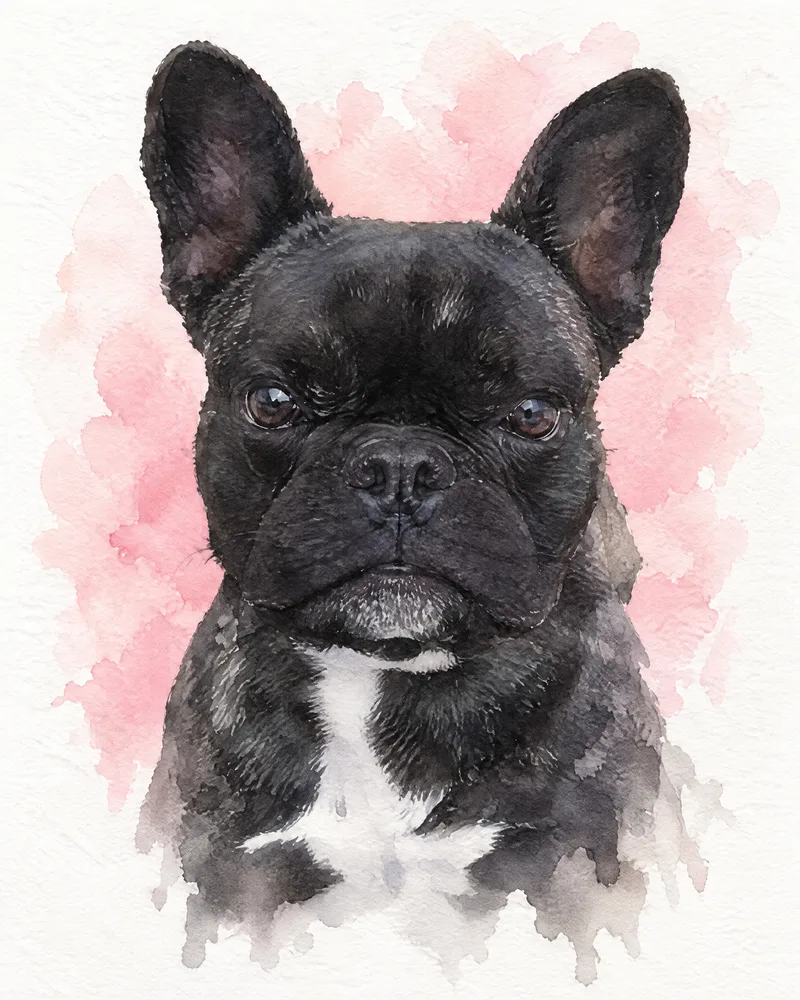
Brindle
French Bulldog · Rocco · Blush wash
Dark stripes glazed over a dry base; on a dark brindle they stay a quiet sheen, as in the photo.
We keep the stripes where they show, the bat ears, the white chest patch.
Photo tip Daylight: in a dim room brindle reads as plain dark fur.
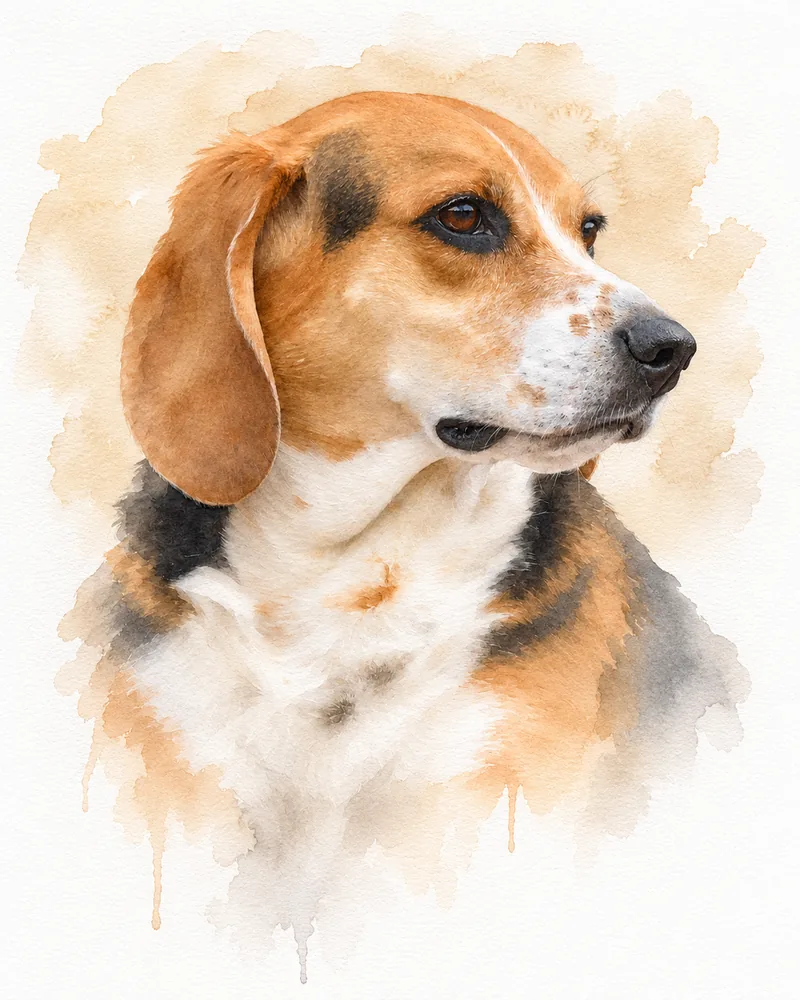
Tricolor
Beagle · Bean · Sand wash
Three colours in layers, light to dark: tan first, the black saddle last.
We keep the white blaze and chest, the line where tan meets black.
Photo tip A three-quarter view shows all three colours.
Examples painted by our studio from free-licence photos, not customer orders. Your dog is painted from your own photo.
Dog Fur in Watercolor, Up Close
Every “how to paint a dog in watercolor” tutorial asks the same questions: how to keep white fur white, how to paint black without mud, how to make long hair soft. In a portrait from the studio those choices are made for you. This is where you see them.
Paper left white
Biscuit, the Pembroke Welsh Corgi
What tutorials call saving the whites: the white ruff is untouched paper, never white paint.
Wet-in-wet
Daisy, the Cavalier King Charles Spaniel
Colour dropped into wet paper, so long hair blurs at the ends instead of stopping in a line.
Glazing
Bean, the Beagle
Thin layers that dry between coats: the black saddle sits on the tan instead of mixing to mud.
Soft edges, sharp eyes
Bailey, the Yellow Labrador
The edges dissolve into the wash; the eyes and the nose stay the sharpest marks, so it still reads as your dog.
On Paper, Like a Real Watercolor
The Art Print is unframed matte fine-art paper, 200 gsm, the closest of our pieces to a watercolor sheet. From $39 at 6 × 8 in to $89 at 30 × 40 in.
Also as a digital file ($9), on canvas (from $69) or as a framed print. Made to order, ships within 10 business days and arrives in 3–4 weeks (US and Australia).
- 8 × 10 in$39
- 11 × 14 in$49
- 16 × 20 in$59
- 30 × 40 in$89
Watercolor Dog Portrait Questions
Can a black dog look good in watercolor?
Yes. Black is painted in layers of blue and brown rather than one flat black, with the highlights left as paper, so the eyes and the shape of the face stay readable. A daylight photo, taken facing a window, helps most.
My dog is white. Won’t it disappear on white paper?
The white of the coat is the paper itself; the dog is drawn by the shadows around it and the coloured wash behind it. A wash with some colour, dusty blue or sage, frames a white dog best.
Will my dog’s merle or brindle markings be in the right place?
The portrait is painted from your photo, so the patches and stripes follow it. If something is off, every preview comes with 3 free redos.
Can a watercolor dog portrait look realistic?
Ours sits between loose and realistic: the face is detailed (eyes, nose, markings), and the edges and the body fade into the paper. For a fully realistic finish, Classic Oil is the closer style. See dog oil paintings
Is there a free app that turns my dog’s photo into a watercolor?
No app needed: the studio on this page works in your browser and shows the watercolor in about 60 seconds. Previews are free, 3 a day, without signing up; you pay only for the full file ($9) or a print.
My dog looks different after grooming. Which photo should I use?
The one with the coat you want to remember: the portrait paints the coat in the photo, a short clip or the full fluff.